
Android vs iOS vs React Native App Development: Which Should You Choose? Before a single screen gets designed, every mobile …
How Much Does Mobile App Development Cost in India?
Ask three mobile app development companies for a quote on the same idea, and you’ll likely get three very different numbers. One says ₹1 lakh. Another says ₹8 lakh. A third says ₹25 lakh. None of them are necessarily lying, they’re just pricing different levels of complexity, platform coverage, and long-term support.
This guide breaks down what mobile app development actually costs in India in 2026, what drives the price up, and how to read a quote before signing anything.
Why Mobile App Development Cost Varies So Widely
App development cost isn’t a fixed number because “an app” isn’t a single kind of product. A simple 5-screen informational app and a real-time marketplace platform with live tracking, chat, and payment escrow are both technically “apps,” but the engineering effort behind them is nowhere close to comparable. Cost depends primarily on:
- App complexity (number of screens, user roles, backend logic)
- Platform choice (native Android, native iOS, or cross-platform)
- Real-time features (live tracking, chat, notifications)
- Backend and API integrations (payments, cloud storage, third-party services)
- Design complexity (template-based vs. fully custom UI)
- Whether you hire an in-house team, freelancer, or app development firm
Mobile App Development Cost by Complexity
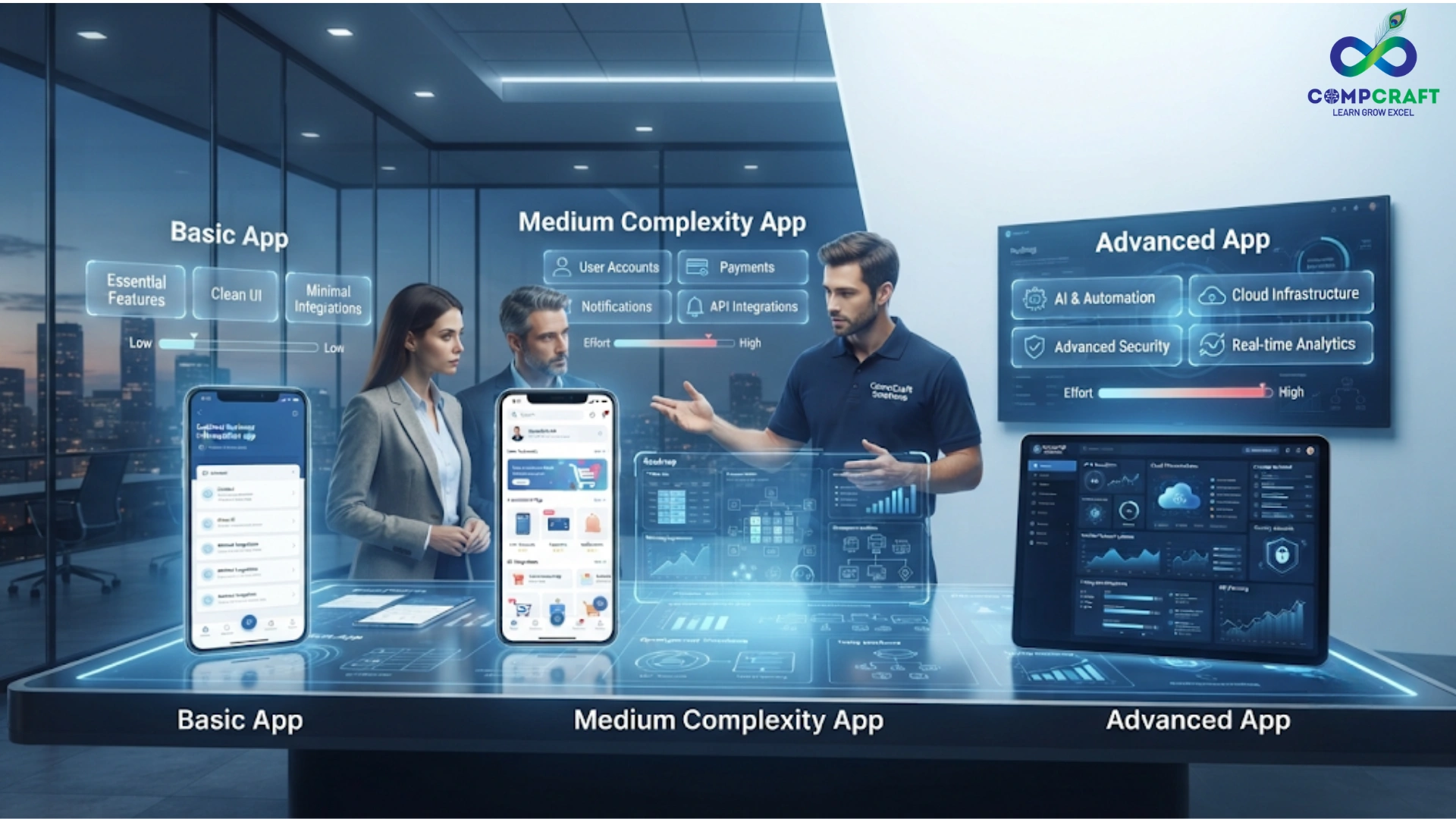
Simple / MVP App — approx. ₹60,000 to ₹3,00,000
A basic app with limited screens, static content, and minimal backend logic, think a digital brochure app or a simple booking form, typically falls in the lower range of the market, generally starting from a modest few lakh rupees for a single platform. This tier is ideal for testing an idea before committing to a full build.
Medium Complexity App — approx. ₹3,00,000 to ₹10,00,000
Apps with user accounts, basic backend logic, moderate design work, and standard integrations (payments, notifications, maps) sit in the mid-range tier. This covers most standard business apps: e-commerce, service booking, loyalty programs, and content-driven apps with a reasonable feature set.
Advanced / Enterprise App — approx. ₹10,00,000 to ₹40,00,000+
Apps requiring real-time features, live tracking, chat, complex admin dashboards, multi-role user management, or AI-powered functionality sit at the top end of the pricing spectrum. This tier reflects the cost of building something closer to a marketplace or on-demand service platform, with significantly more backend engineering, integrations, and testing involved.
As a rule of thumb: real-time functionality is one of the biggest cost multipliers in mobile app dev. Adding live order tracking, chat, or dynamic data sync can increase project cost several times over compared to a standard static-content app.
Native vs. Cross-Platform: The Cost Difference
Native Android Development — approx. ₹1,50,000 to ₹15,00,000+ (single platform)
Android application development (built in Kotlin) is generally the more affordable native option, though costs scale quickly with feature complexity.
Native iOS Development — approx. ₹2,00,000 to ₹18,00,000+ (single platform)
iOS application development (built in Swift) tends to run 10-20% higher than Android due to Apple’s stricter design and review standards, plus annual developer program fees.
Building Native for Both Platforms — roughly 1.8x to 2x the single-platform cost
Choosing native app development for both Android and iOS effectively means building two separate apps, which roughly doubles development time and cost compared to building for a single platform.
Cross-Platform Development — approx. 30-40% less than two native apps
React native app development and Flutter allow a single codebase to power both platforms. This is consistently the more cost-effective route, cross-platform development typically costs 30–40% less than building two separate native apps, without a meaningful performance gap for most standard business apps.
For most first-time app builds, react native mobile app development or Flutter offers the best balance of cost, speed, and reach across both app stores.
Cost by Development Model
In-House Team — approx. ₹15,00,000 to ₹40,00,000+ per year (salaries and infrastructure)
Best suited for large organizations planning continuous, long-term app development. Upfront hiring and infrastructure costs are high, making this impractical for a first-time app build.
Freelancer — approx. ₹30,000 to ₹2,00,000
The most budget-friendly option for very simple, well-defined apps. Best for tight budgets, but carries higher risk around quality consistency, timelines, and long-term support.
Indian App Development Agency — approx. ₹2,00,000 to ₹20,00,000+
A structured mobile application development company offers design, development, backend, QA, and post-launch support as a team, typically at a mid-range price point with far more accountability than a freelancer.
Offshore/US Agency — approx. 3x to 5x the cost of an equivalent Indian team
International agencies charge significantly more for comparable work, often billing $50-150+ per hour versus roughly $15-40 per hour for an equivalent Indian team, without a proportional difference in output quality when working with an experienced Indian app making company.
Hidden Costs Businesses Often Miss
The initial development quote is rarely the full picture. Budget for:
- Apple Developer Program fee — approx. $99/year (~₹8,500/year), required annually for iOS application development and App Store publishing
- Google Play Console fee — approx. $25 one-time (~₹2,000 one-time), a one-time registration fee for android software development publishing
- Backend hosting and cloud infrastructure — approx. ₹2,000 to ₹50,000+ per month, depending on user base and server load, scaling as usage grows
- Third-party API subscriptions — approx. ₹5,000 to ₹50,000+ per month, covering payment gateways, SMS, maps, and notification services depending on usage volume
- Post-launch maintenance — typically 15–25% of the initial development cost annually, covering bug fixes, OS compatibility updates, and minor feature additions
Skipping these in the initial budget is one of the most common reasons a project’s real cost ends up well above the original quote.
How to Read a Quote Before Signing
Before choosing between top app development companies, ask:
- What exactly is included, design, frontend, backend, testing, and deployment, or just the build?
- Is this a fixed-price or hourly billing model? Fixed pricing offers more budget predictability.
- What’s the post-launch maintenance cost, and what does it cover?
- Is the quote for one platform or both? Confirm whether “app development” means Android, iOS, or both.
- What happens if requirements change mid-project?
If a quote for a full-featured app on both platforms comes in dramatically lower than every other quote you’ve received, ask specifically what’s been excluded, that gap usually means missing scope, not better efficiency.
Ways to Reduce Mobile App Development Cost
- Start with an MVP – Build only the core features first, then expand based on real user feedback
- Choose cross-platform over native – Unless there’s a specific technical reason for native, react native app development or Flutter saves significant cost
- Launch on one platform first – If your audience skews heavily toward one OS, delaying the second platform reduces initial spend
- Use existing third-party tools – Payment gateways, SMS APIs, and notification services save development time compared to building these from scratch
Why Businesses Choose CompCraft Solutions for App Development
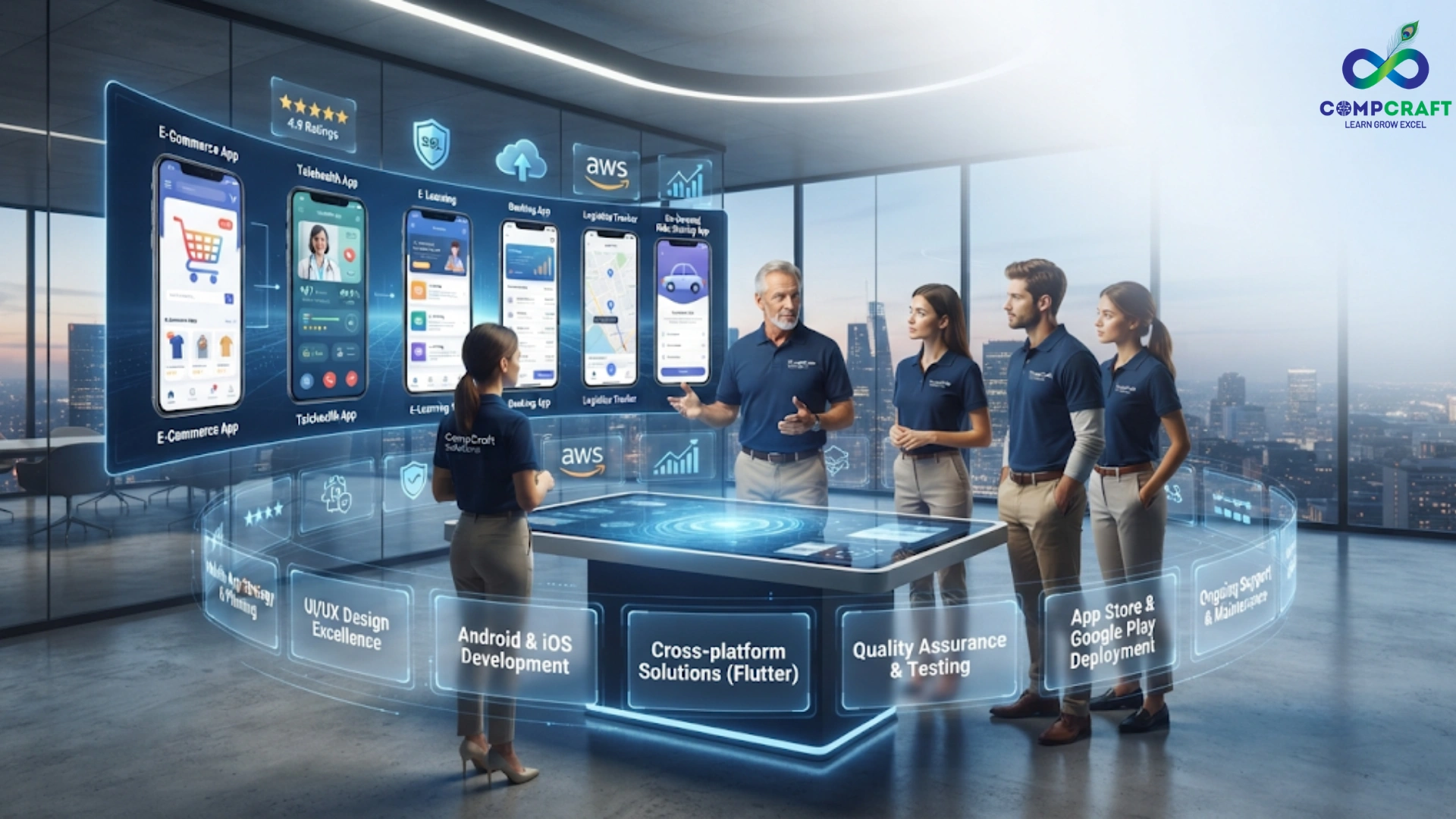
CompCraft Solutions builds native Android application development in Kotlin, native iOS application development in Swift, and react native mobile app development for businesses that want cross-platform reach without doubling their budget. With scalable backend infrastructure through Node.js, Django, AWS, and Firebase, CompCraft Solutions provides transparent, itemized quotes so businesses know exactly what they’re paying for, and what’s included in post-launch support.
Final Thoughts
Mobile app development cost in India varies enormously because “an app” covers everything from a simple MVP to a full-scale marketplace platform. Understanding what actually drives cost, complexity, platform choice, and real-time features, helps businesses set a realistic budget and evaluate quotes with confidence, rather than defaulting to the cheapest number on the table.
Note: All figures above are approximate market ranges for reference only and can vary based on project scope, agency, and region. Get a detailed, itemized quote for your specific requirements before budgeting.
Planning to build an app and want a realistic budget? Get in touch with CompCraft Solutions for a transparent, itemized quote based on your actual requirements.
Why Every Business Needs a Fast, Mobile-Friendly Website Most businesses focus on how their website looks. Far fewer focus on …
Common Hardware and Software Problems Businesses Face and How to Solve Them Technology problems rarely announce themselves in advance. One …
Annual Maintenance Contract for IT: Benefits Businesses Actually Search For For most businesses, IT support only comes up when something’s …
Custom Website Development vs WordPress: Which Is Better for Your Business? One of the first decisions in building a website …
10 Signs Your Business Needs Professional IT Hardware & Software Support Most businesses don’t plan for IT problems, they react …
Computer Repair Shop Near Me: How to Choose the Right IT Hardware & Software Service Provider Every business eventually hits …
Laptop Repair Near Me: A Complete Guide to Hardware and Software Solutions for Businesses Every modern business runs on technology, …

