
How Much Does Mobile App Development Cost in India? Ask three mobile app development companies for a quote on the …
Android vs iOS vs React Native App Development: Which Should You Choose?
Before a single screen gets designed, every mobile app project starts with one decision that shapes everything else: which platform, and which development approach. Native Android, native iOS, or cross-platform. Get this choice right, and the rest of the build goes smoothly. Get it wrong, and businesses end up rebuilding from scratch months later.
This guide breaks down the real differences between Android app development, iOS app development, and cross-platform app development, so you can choose based on your business goals, not guesswork.

What Is Native Android App Development?
Android application development is built using Kotlin (or Java), designed specifically for Android’s operating system and Google Play ecosystem. Android software development gives full access to device-specific features and delivers the smoothest possible performance on Android devices.
What Is Native iOS App Development?
iOS application development uses Swift, built specifically for Apple’s ecosystem and the App Store. Like native Android, this approach offers maximum performance and full access to iOS-specific features like Face ID, Apple Pay, and deep system integrations.
What Is Cross-Platform App Development? React Native and Flutter Explained
React native app development and similar frameworks like Flutter allow one codebase to power both Android and iOS simultaneously. Instead of building and maintaining two separate apps, a single team builds once and deploys to both platforms, cutting development time and long-term maintenance effort significantly.
Native App vs React Native: Which Performs Better?
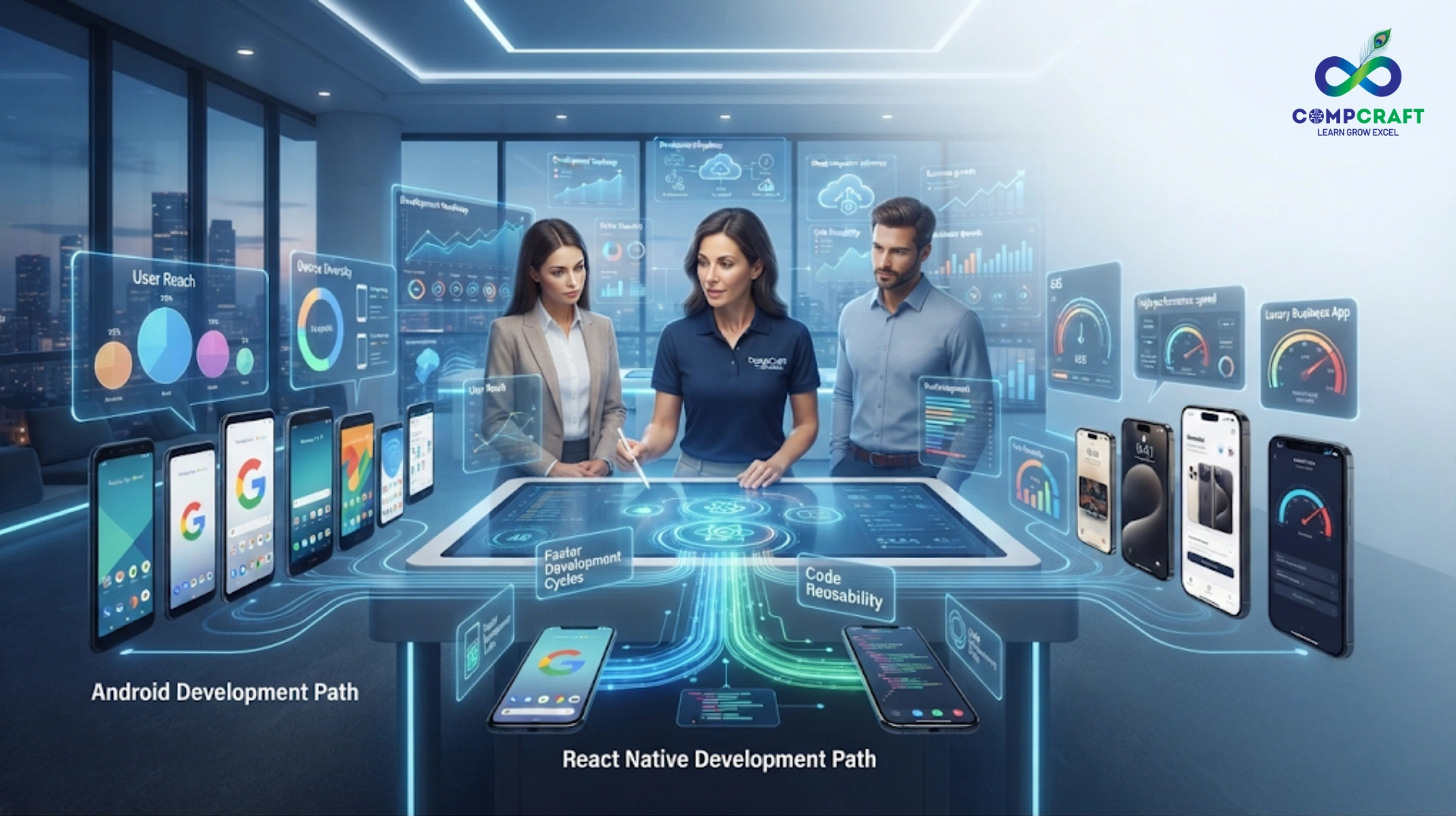
Native app development wins here, whether Android or iOS, since the app is built directly for that operating system with no translation layer in between. For apps with heavy graphics, complex animations, or real-time processing (like gaming or AR features), native is usually the safer choice.
React native mobile app development has closed much of this gap in recent years and performs well for most standard business apps, forms, content, e-commerce, bookings, but may show minor lag in highly graphics-intensive use cases compared to fully native builds.
Mobile App Development Cost: Native vs Cross-Platform Pricing
This is where cross-platform clearly wins. Building one codebase for react native app development costs significantly less than building and maintaining two separate native apps (one Android developer team, one iOS team). For businesses with limited budgets wanting presence on both app stores, cross-platform is usually the more practical starting point.
How Long Does It Take to Build an App? Native vs Cross-Platform Timelines
Cross-platform development is faster to market since there’s no need to build two apps in parallel. A single app development company can develop, test, and deploy to both platforms simultaneously, compared to native development, which typically requires two separate development tracks running at once.
Which Approach Gives Better Access to Device Features?
Native development has the edge when an app needs deep integration with device-specific features, biometric authentication, advanced camera controls, ARKit/ARCore, or platform-exclusive APIs. Cross-platform frameworks have improved significantly here too, but for cutting-edge feature access, native app development still leads.
Does React Native Feel Like a Native App? UX Comparison
Native apps naturally feel more “at home” on their respective platforms, since UI components follow each OS’s own design language by default. Cross-platform apps can achieve this too, but it requires more deliberate design work from the app development firm to avoid a generic, “built once, adapted twice” feel.
App Maintenance Cost: Why Cross-Platform Is Cheaper Long-Term
Maintaining two separate native codebases means double the work for every update, bug fix, or new feature. Cross-platform development simplifies this considerably, one update typically applies to both platforms, reducing ongoing costs for mobile application development companies and businesses alike.

Android vs iOS Market Share in India: Why It Affects Your Platform Choice
If your audience is split across both Android and iOS, which is the case for most businesses, cross-platform development ensures simultaneous reach without picking a “first” platform. This matters especially for businesses in markets like India, where android mobile app development reaches a significantly larger user base than iOS.
When Should You Choose Native Android App Development?
- Your primary or entire user base is on Android
- The app requires deep Android-specific integrations
- Performance is critical and budget allows for platform-specific development
- You’re building a highly custom, hardware-dependent application
When Should You Choose Native iOS App Development?
- Your target audience skews toward iOS users (premium products, US/UK markets)
- The app needs deep integration with Apple-specific features (Face ID, Apple Pay, HealthKit)
- Brand experience and platform-native feel are top priorities
When Should You Choose React Native or Cross-Platform Development?
- You need to launch on both Android and iOS with a limited budget
- Time to market is a priority
- Your app has standard-to-moderate feature complexity (content, e-commerce, bookings, service apps)
- Long-term maintenance costs are a major consideration
For most businesses building their first app, react native mobile app development offers the best balance of cost, speed, and reach, unless there’s a specific technical reason to go native.
Is React Native Good Enough for My App? Common Misconceptions
“Cross-platform apps always feel low-quality.” This was true years ago, but modern frameworks like React Native now power apps from major companies with smooth, native-like performance for most standard use cases.
“Native is always better, no matter what.” Native is better for specific scenarios, not universally. For a standard business or service app, the performance gap is rarely noticeable to end users, while the cost and time savings from cross-platform are very noticeable to the business.
“You can decide the platform later.” Platform approach affects architecture from day one. Switching from native to cross-platform (or vice versa) after development has started usually means starting over, not adjusting course.
How to Choose the Best Mobile App Development Company for Your Project
Whether you land on Android, iOS, or cross-platform, the development partner matters just as much as the technology choice. Look for a mobile app development company that:
- Has genuine experience across native and react native app development, not just one
- Asks about business goals and audience before recommending a stack
- Handles backend and API development alongside front-end app building
- Offers clear post-launch support, not just a one-time build and handoff
Businesses comparing top app development companies or app creation companies should be cautious of any firm that recommends the same approach for every project, that’s usually a sign of limited technical range, not the right advice for your specific case.
App Development Company in Charni Road, South Mumbai: CompCraft Solutions
CompCraft Solutions builds across all three approaches, native Android application development in Kotlin, native iOS application development in Swift, and react native app development for businesses that need cross-platform reach without doubling their budget. Backed by scalable backend infrastructure (Node.js, Django, AWS, Firebase), CompCraft Solutions helps businesses choose the right approach based on actual goals, not a default tech stack.
Final Thoughts
There’s no universally “best” choice between Android, iOS, and cross-platform development, only the best choice for your specific audience, budget, and feature requirements. For most businesses, cross-platform development offers the strongest balance of cost and reach, while native development remains the right call for performance-critical or platform-specific apps.
Not sure whether to build native or cross-platform? Talk to CompCraft Solutions for an honest recommendation based on your business and budget, in Charni Road, South Mumbai.
Why Every Business Needs a Fast, Mobile-Friendly Website Most businesses focus on how their website looks. Far fewer focus on …

Common Hardware and Software Problems Businesses Face and How to Solve Them Technology problems rarely announce themselves in advance. One …

Annual Maintenance Contract for IT: Benefits Businesses Actually Search For For most businesses, IT support only comes up when something’s …
Custom Website Development vs WordPress: Which Is Better for Your Business? One of the first decisions in building a website …

10 Signs Your Business Needs Professional IT Hardware & Software Support Most businesses don’t plan for IT problems, they react …
Computer Repair Shop Near Me: How to Choose the Right IT Hardware & Software Service Provider Every business eventually hits …
Laptop Repair Near Me: A Complete Guide to Hardware and Software Solutions for Businesses Every modern business runs on technology, …

